Entry · Ref MACEI_KZ
Finding Your Perfect Notebook: The Value of Trusted Writing Journals
- Posted
- 2026-10-18
- Last amended
- 2026-10-18
- Account
- @mytrustedwritingjournalsview
For years I kept a stack of half-filled notebooks on a shelf, each one abandoned because the paper bled through, the binding cracked, or the pages refused to lay flat. I blamed myself for not having the discipline to finish a journal, but the real problem was the notebook itself. Once I started paying attention to the materials and construction, everything changed. That is when I began to understand the real value of trusted writing journals.
Why the Notebook Matters More Than You Think
A good notebook does not make you a better writer, but a bad one can certainly stop you from writing. I have watched friends give up on morning pages because their cheap spiral bled so badly they could not read their own entries. Others quit bullet journaling because the pages fell out after two months. The notebook is the tool, and like any tool, it needs to fit the hand and the purpose.
When I test a notebook now, I look at three things: paper, binding, and size. Paper is the most important. If the ink feathers or bleeds through, the whole experience feels cheap and frustrating. Binding matters because a notebook that does not lie flat is a nuisance. Size matters because you will carry it with you. A journal that is too big stays on the desk. One that is too small feels cramped. The balance is personal, but the quality should not be.
Paper That Works With Your Pen
I have used fountain pens for years, and nothing ruins a writing session faster than paper that cannot handle ink. Tomoe River paper is the gold standard for fountain pen users. It is thin enough to let you pack a lot of pages into a slim notebook, yet it handles wet ink without bleeding or feathering. The downside is that it shows ghosting, which bothers some people. I find it gives the page character, but I understand why others prefer something more opaque.
Rhodia uses a coated paper that is smooth and consistent. It works well with almost every pen I own, from a Lamy Safari filled with Noodler's ink to a plain Pilot G2. Rhodia notebooks are also affordable, which makes them a good choice if you write a lot and do not want to spend a fortune on refills. The wirebound pads are great for drafting, but the staple-bound notebooks are better for journaling because they fit in a bag more easily.
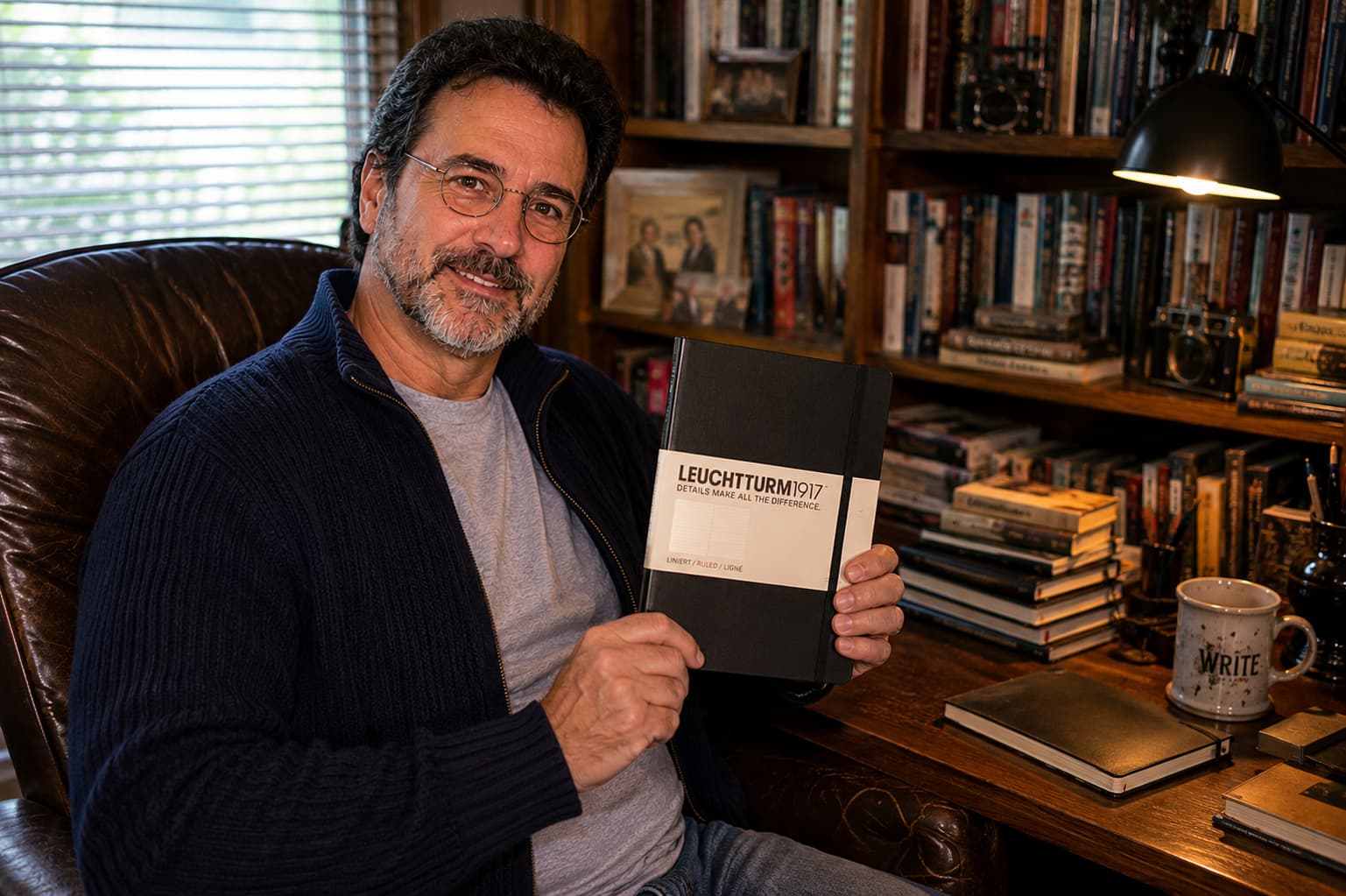
Leuchtturm1917 notebooks use a slightly heavier paper that handles most pens well, though I have had some bleed-through with broader fountain pen nibs. Their real strength is the thoughtful design: numbered pages, an index, and a sticker for archiving. For bullet journaling, the Leuchtturm1917 is almost a standard. The size is right, the paper is good enough, and the details make it feel like a system rather than just a notebook.
Moleskine is probably the most famous brand, but I hesitate to recommend it for serious writing. The paper is thin and does not handle fountain pen ink well. I have had bleed-through with anything wetter than a fine ballpoint. The brand has built a reputation on style, and the notebooks look beautiful on a desk, but for daily use with pen and ink, there are better options. That said, if you use a Uni-ball Jetstream or a fine Pilot G2, Moleskine works fine. It just depends on what you are writing with.
Notebooks That Travel Well
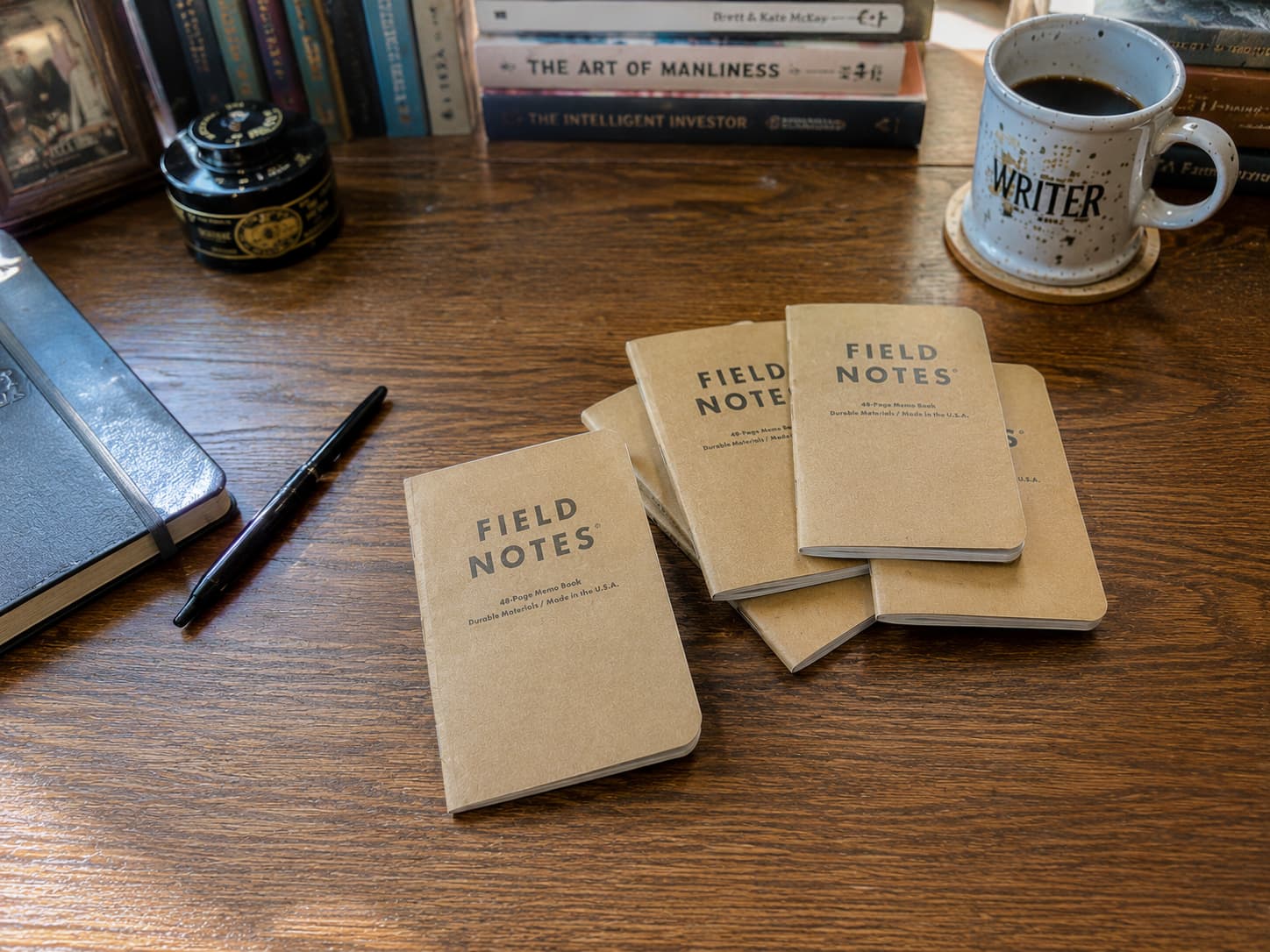
Field Notes notebooks are small, durable, and designed to be carried in a pocket. I keep one in my jacket at all times for sudden ideas, observations, and sketches. The paper is not fountain pen friendly, but it works well with ballpoints and rollerballs. The covers take a beating, which I like. A pristine notebook makes me hesitate to write in it. A beat-up Field Notes feels like it has already been used, so I feel free to fill it with whatever comes to mind.
Midori MD notebooks are the opposite. They are elegant, minimal, and the paper is some of the best I have ever used. The Midori MD Cream has a slight texture that slows the pen just enough to make handwriting feel deliberate. I use one for longer reflective writing, the kind where I am not just capturing notes but working through something slowly. The paper handles fountain pen ink beautifully, and the binding allows the notebook to lie completely flat.
Hobonichi Techo notebooks are famous in the planner community, but they also work well for journaling. The thin Tomoe River paper lets you fit a year of daily entries into a book that is smaller than a paperback. The layout includes a daily page with a grid, which I find helpful for both writing and sketching. The cover is separate, which means you can swap it out without changing the notebook itself. It is a system, and once you get used to it, it is hard to go back to anything else.
Trusted Writing Journals for Different Purposes
Not every notebook needs to be perfect for every use. I keep several in rotation. The Leuchtturm1917 is my bullet journal. The Midori MD is my long-form journal. The Field Notes is my pocket notebook. The Rhodia is my scratch pad for drafting. Each one serves a different purpose, and each one is a trusted writing journals in its own right, because I know exactly what it will do and what it will not.

When I recommend a notebook to someone new to journaling, I ask them what pen they use. If they say a ballpoint or a fine rollerball, I point them toward a Moleskine or a Leuchtturm1917. If they use a fountain pen, I suggest Rhodia or Midori MD. If they want something that fits in a pocket, Field Notes is the obvious choice. The point is not to find the best notebook in the world, but to find the one that matches your habits.
The Writing Itself
All of this talk about paper and binding can distract from the real goal, which is to write. I have seen people spend more time researching notebooks than actually filling them. There is a version of myself that would have done the same. But the truth is that the best journal is the one you will actually use. A cheap spiral notebook filled with honest writing is worth more than a beautiful leather journal that sits empty on a shelf.
That said, the right notebook can remove obstacles. When the paper feels good under your pen, when the binding does not fight you, when the size fits your bag, writing becomes easier. You stop thinking about the notebook and start thinking about what you want to say. That is the goal. That is why I keep coming back to the same brands and the same models. They have proven themselves over years of use, and I trust them.
Overcoming Writer's Block With the Right Tools
Writer's block is not always about the words. Sometimes it is about the environment. I have found that switching notebooks can break a mental logjam. If I am stuck on a project, I will open a fresh Midori MD and write by hand for fifteen minutes. The act of handwriting seems to bypass the internal editor. The pen moves, the ink flows, and eventually the words come. The physical sensation of writing on good paper is part of that process.
Journaling prompts can also help. I keep a list of prompts inside the back cover of my bullet journal. Things like "What surprised me today?" or "What am I avoiding?" are simple but effective. Julia Cameron's book The Artist's Way popularized the practice of morning pages, three pages of longhand stream-of-consciousness writing done first thing in the morning. I have done that practice on and off for years, and the quality of the notebook matters for it. You need paper that can handle the flow, because you are not editing, you are just writing. Tomoe River paper in a Hobonichi Techo or a Midori MD works perfectly for this.
Where to Find Them
Most of these notebooks are available on Amazon, which is convenient but not always the best place to browse. Amazon's search is cluttered, and the reviews mix genuine notebook reviews with people who bought the wrong size or expected something different. I prefer to buy from specialty stationery shops or directly from the manufacturer. Etsy has some excellent handmade notebooks, though you have to read the descriptions carefully to know what kind of paper they use. If you are new to this, I recommend starting with a Rhodia dotPad or a Leuchtturm1917. They are affordable, widely available, and give you a baseline for what a good notebook feels like.
Once you know what you like, you can explore more expensive options. The Midori MD and Hobonichi Techo are worth the price if you write every day. The Field Notes are worth it if you want something rugged and portable. The Moleskine is worth it if you love the look and do not use wet inks. The point is to match the tool to the task, and to remember that the tool is there to serve the writing, not the other way around.
Final Thoughts
I have been writing in notebooks for more than twenty years. I have filled dozens of them, from cheap spirals to expensive leather journals. The ones that worked best were not the most expensive or the most famous. They were the ones that fit my hand, my pen, and my habits. That is the real definition of trusted writing journals. They are the ones you return to, the ones you know will work, the ones that let you forget about the notebook and focus on the writing.
If you are starting out, do not overthink it. Pick one of the brands I mentioned, buy the size and ruling that appeals to you, and start writing. If it does not work, try another. The process of finding your notebook is itself a kind of journaling. Pay attention to what you like and what you do not. Over time, you will build a set of preferences that are genuinely yours, and the notebooks you keep will become extensions of your thinking.